
Acrylic vs PU vs Laminate Kitchen Finishes
Updated 18 August 2026 · D Woods Villa Interior
Laminate is the most practical choice for most Indian kitchens. Acrylic looks best and shows fingerprints. PU offers any colour and can be repaired on site. The performance gap between them is smaller than the price gap, and the finish matters far less than the hardware behind it.
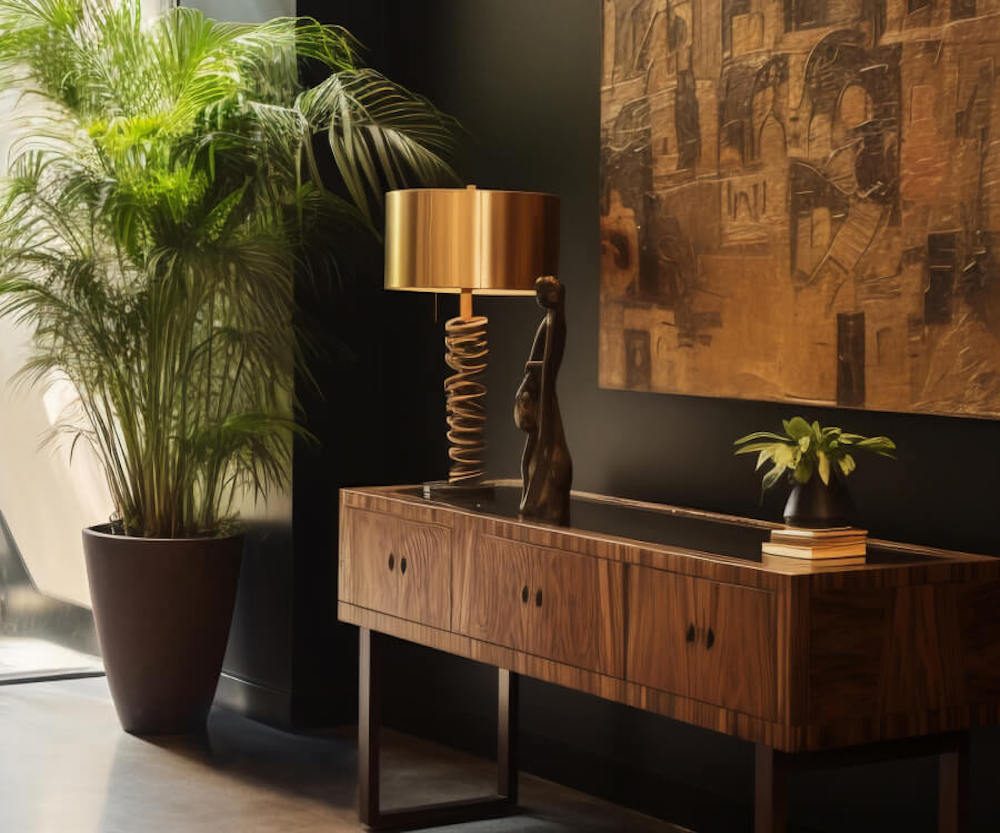
The comparison
| Laminate | Acrylic | PU | |
|---|---|---|---|
| Full kitchen cost | ₹1,80,000 | ₹2,20,000 | ₹2,50,000 |
| Scratch resistance | Very good | Moderate | Moderate |
| Fingerprints | Barely visible | Highly visible | Visible on gloss, not on matte |
| Repairable on site | No | No | Yes |
| Colour range | Very wide | Limited to stocked colours | Unlimited |
| Heat tolerance | Good | Good | Good |
| Expected life | 10 to 15 years | 10 to 12 years | 8 to 12 years |
Laminate
The default, and there is no shame in it. A 1 mm laminate on a good substrate resists scratching better than either alternative, hides fingerprints, comes in hundreds of finishes including convincing wood and stone patterns, and costs the least.
Its weakness is the edge. A laminate shutter has a visible band line where the edge tape meets the face. Better edge banding minimises it; nothing eliminates it. If seamlessness matters to you visually, this is the reason to spend more.
Acrylic
Acrylic delivers a deep, seamless gloss that genuinely looks different from laminate, particularly in darker colours. It is the finish that photographs best and the one most people point at in a showroom.
The trade-off is daily. High gloss shows every fingerprint, and in a kitchen where hands are constantly wet or oily, that means wiping shutters far more often than you expect. It also shows fine surface scratches over time, particularly on dark colours, and cannot be repaired locally. One damaged shutter means one replaced shutter.
If you like the look, buy it in a lighter colour. Fingerprints on white acrylic are almost invisible; on charcoal they are permanent-looking until wiped.
PU
Polyurethane is sprayed, not laminated, which gives it two properties the others lack: any colour you can specify, and on-site repairability. A scratch or chip can be filled, sanded and resprayed without replacing the shutter, which over a twelve-year life is a genuine advantage.
Matte PU is our usual recommendation when a client wants something beyond laminate. It gives a soft, expensive-looking finish without acrylic's fingerprint problem, and the colour flexibility means it can match anything else in the room.
The caveat is application quality. PU is only as good as the spray booth and the technician. A poorly applied PU finish shows orange-peel texture and will not last. Ask to see a completed PU kitchen before committing, not a sample chip.
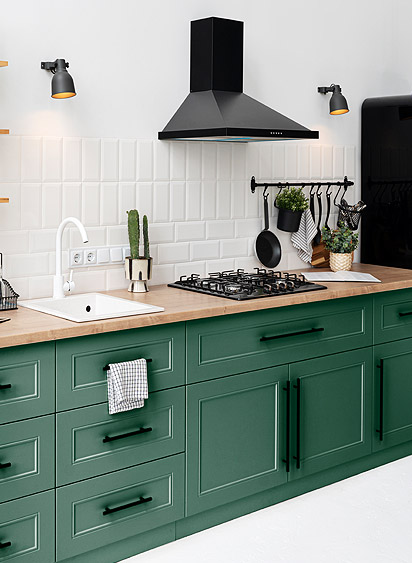
What about lacquered glass?
Back-painted glass shutters cost around ₹2,90,000 for a full kitchen. They are the easiest surface to clean, entirely non-porous, and visually striking. They are also heavy, which puts more load on hinges, and the edges chip if handled carelessly during installation or later. A good choice for upper units and a riskier one for base units in a busy family kitchen.
How to actually decide
- Who cleans the kitchen, and how often? If shutters get wiped daily, acrylic is fine. If not, laminate or matte PU.
- How long will you live here? Under five years, laminate. Longer, PU's repairability starts to matter.
- Is there a specific colour you need? If yes, PU is the only one that guarantees it.
- How much daylight does the kitchen get? Gloss finishes in a dark kitchen look flat. Matte in a bright kitchen looks richer.
The point worth repeating
The difference between laminate and PU across a full kitchen is about ₹70,000. The difference between unbranded and branded hardware is about ₹28,000. If you can only afford one upgrade, upgrade the hardware. You will notice it every single day, and unlike the finish, it cannot be changed later.
Where to Go Next
Rates, scope and area-wise detail on the pages people read after this one.
Frequently asked questions
Which kitchen finish is best for Indian kitchens?
Laminate for most homes. It resists scratching better than acrylic or PU, hides fingerprints, comes in a wide range and costs the least. The finish matters far less than the hardware behind it.
Does acrylic show fingerprints?
Yes, noticeably, especially in darker colours. In a kitchen where hands are wet or oily this means wiping shutters far more often than expected. Lighter acrylic colours hide marks much better.
Can PU finish be repaired?
Yes, and it is the only one of the three that can. A scratch or chip can be filled, sanded and resprayed on site without replacing the shutter, which matters over a ten to twelve year life.
Is lacquered glass a good choice?
For upper units, yes. It is non-porous, easy to clean and visually striking. For base units in a busy family kitchen it is riskier, because it is heavy and the edges chip if handled carelessly.
What is the difference in cost between finishes?
Roughly 1.8 lakh for laminate, 2.2 lakh for acrylic, 2.5 lakh for PU and 2.9 lakh for lacquered glass on the same L-shaped kitchen. The cabinets and hardware are identical; only the door face changes.
D Woods Villa Interior. Design, manufacturing and execution under one roof, serving Noida, Greater Noida and Ghaziabad. Everything costed here has been costed for a real home.
Get a quotation you can compare properly
We measure your Sector 110 flat, prepare 3D drawings of every room, and issue an itemised quotation before you commit to anything.
Call +91 97738 54713 WhatsApp us